Research Projects
Situated in international relations, environmental politics, and security studies, my research takes interest in the domestic, international, and ecological politics of peacetime security policy.
In my primary research stream in nuclear politics, I examine how public officials, reporters, and activists interact to frame issues, influence how the public views problems, and, sometimes, alter the actions of governments. I am particularly interested in how the contentious popular nuclear politics of the early postwar era generated norms that underpin modern public attitudes about nuclear weapons.
My current projects in environmental politics come at questions of political ecology from two angles. In one project, I theorize how routine state practices cast states into inescapable relationships with the natural world. Taking up the example of the Pacific Proving Ground, I compare rhetoric from civilian and military officials during the nuclear testing era with the language of American ecologists’ reports made about the sites and the health of local communities after the site was decommissioned, arguing that both discourses contain theories about the proper relations between state actions and the natural environment. A second project I am working on with Dominic Pfister traces the evolution of plastic pollution as a global governance issue, taking particular interest in why and how microplastics became a central concern for WHO and UNEP agendas. We are currently preparing to conduct interviews with relevant practitioners.
In addition to these projects, I have a longstanding interest in territorial politics, dating back to my undergraduate research on territorial disputes and historical memory. I am currently wrapping up a project in this research stream illuminating how settler colonial territorial claims defy conventional expectations for expanding states in international relations.
You can read more about my projects below. I am always happy to chat about my work, and I enjoy meeting new people. So please, feel free to reach out at rabinowitz.43@osu.edu.
Nuclear Politics
“The Other Nuclear Taboo: Impression Management and the Origins of the Norm Against the Public Display of Nuclear Tests”
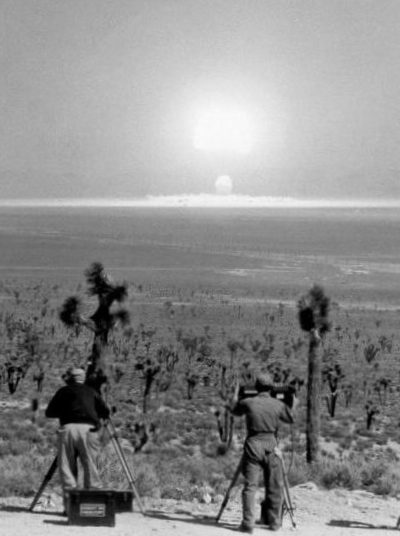
In July 1946, UN Representatives, reporters, and members of the U.S. Congress traveled to Bikini Atoll to watch the first postwar nuclear test. It was a highly visible public performance months in planning. At the time, both the campaign for international control of atomic energy and the deterrence of future aggression were thought to depend on displays of this kind. In the years that followed, officials insisted that nuclear demonstrations and test films could awaken policymakers, local leaders, and the general public to the realities of modern warfare. Why, then, did the public display of nuclear testing disappear from international politics? This article shows that a norm against public nuclear displays emerged in the 1940s and 50s, as U.S. officials conspired to build public support while developing and deploying a usable nuclear arsenal. Their efforts to manage impressions through selective demonstrations and broadcasts of tests, however, broke down as fallout fears recast testing as an independent source of danger. Rather than seeing tests as illustrations of future war, any tests the public could see were interpreted as a problem in and of themselves. Under tremendous pressure to end testing altogether, officials turned to underground tests and argued that unlike atmospheric tests, they could not be effectively policed in an international agreement. The 1963 Partial Test Ban Treaty thus helped to solidify a norm underpinning modern nuclear politics: that nuclear weapons are publicly known but their destructive capacity is never seen.
“Legitimation, Expertise, and the Social Standing of Critique: How Justifying the Bomb Turned Scientists into Authorities on International Politics”
Why were scientists such effective public critics of U.S. foreign policy in the initial postwar years? This paper argues that the American government fell victim to the success of its own early narratives about the atomic bomb. At the end of World War 2, U.S. political leaders sang the praises of atomic scientists. The atomic bomb was, in Truman’s words, “the greatest achievement of organized science in history.” These official discourses tying victory to scientific achievement boosted the political status of scientists and allowed them to claim expertise on one of the most vexing political issues of the time—nuclear weapons. The paper first theorizes how states’ legitimation efforts produce hierarchies of relevant expertise; these may remain active even after governing actors have sought to shift their legitimating narrative. While instrumentally important to the state, hierarchies produced in the course of legitimation can also give new actors standing to publicly critique government policy. I then demonstrate the theory by examining the case of postwar American scientists, showing how their roles were redefined for political purposes and how this afforded the scientists social influence to sway public views on nuclear weapons policy.
Environmental Politics & Governance
“Unbracketing Nature: Nuclear Test Sites, Practical Knowledge, and the Everyday Making of Nature-Society Relations“
The rhetoric of national security officials often appears to portray an entirely different planet than the one illuminated by ecologists and other natural scientists. Why is there such a radical disconnect in discourses about the geophysical Earth, even among professionals working in the same departments of government? While conventional accounts focus on competing interests and perceptions of security, this paper illuminates the role of practical knowledge in producing orientations to the natural world. Drawing on the literature on communities of practice, it argues that understandings of nature are produced and communicated informally through everyday practices and know-how. In other words, the natural world is so ubiquitous that it is understood in local terms, relative to practitioners’ goals and routines. The theoretical contribution is illustrated through an analysis of the Pacific Proving Grounds, the former U.S. nuclear test site in the Marshall Islands. The case compares ecological studies conducted by American scientists after testing ceased in the Pacific with the rhetoric of U.S. civilian and military officials about the test site during testing. The casework draws out and compares latent theories about the proper relations between human action and the natural space of the test site.
“Plastic Governance Objects: Object Redefinition, IOs, and the Governance of Plastics Pollution” (with Dominic Pfister)
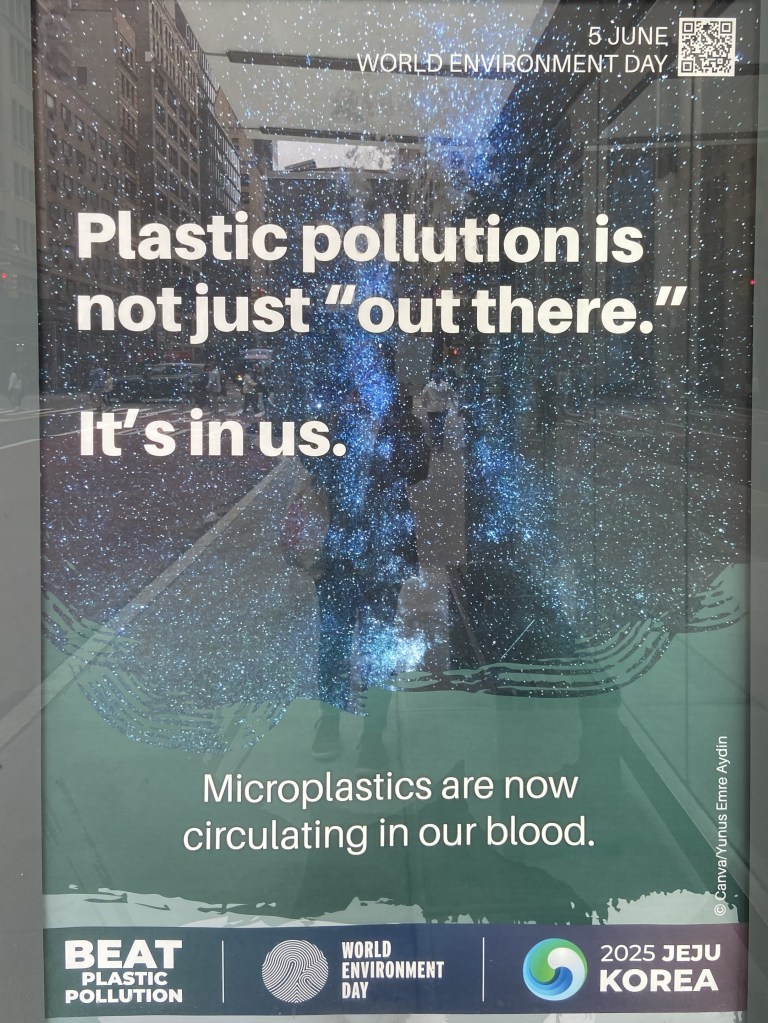
International relations scholars have highlighted the role of problem framing in global governance. Object-oriented theories of global governance emphasize the importance of the constitution of governance objects in setting the conditions of possibility for governance. However, limited attention is paid to how changes in the framing of objects influence the effectiveness of governance. This paper develops a theory of governance object redefinition. Due to the stickiness of governance objects, it is often unfeasible for policymakers to entirely discard existing governance objects that fail to accumulate adequate international support. As a result, governance objects are redefined to improve the argument for governance and alignment with existing regimes for addressing global-scale problems. Using the illustrative case of the construction of plastic as a governance object, we argue that rather than discarding objects, policymakers redefine them in ways more amenable to adoption and effective regulation. The paper demonstrates this process by tracing the redefinition of plastic governance from 2018 to 2025: the paper reconstructs how during this period, policymakers at the UN Environment Programme (UNEP) responded to a lack of success in governing plastic by shifting emphasis from macro-plastics to micro-plastics—a move that increased the salience of plastic for global public health.
Politics of Territoriality & Bordering
“Uneventful Expansion? The Missing Accounts of Settler Colonial Expansion in IR Theory”
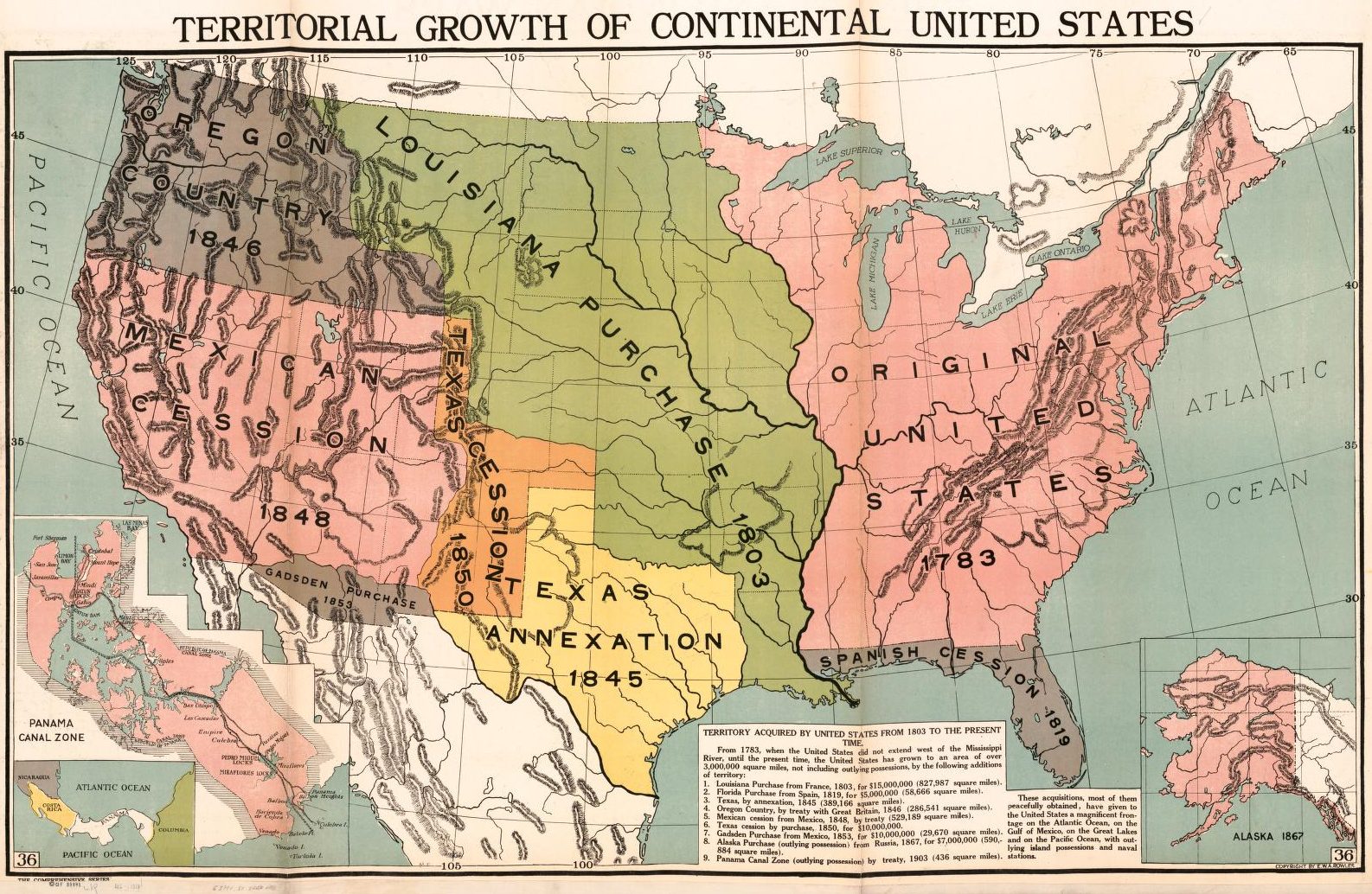
International relations has long been concerned with the territorial expansion of aggressive states. However, little attention has gone to the “peacetime”—though not bloodless—processes of territorial seizure that characterize settler colonial arrangements. This theory note argues that international relations theory has a significant blind spot for the practices settler colonial states use to evict indigenous communities from land. Settler states take territory using different means—sometimes going to war, but more often backing settlers’ property claims against indigenous claimants. This blind spot for “domestic” agents like courts and police forces disguises how settler states transform political, legal, and social arrangements and alter the physical landscapes to naturalize their territorial rule while avoiding the higher potential for international alarm that comes with war. I suggest that settler colonial territorial expansion is better understood as a process than a singular event, which raises significant questions about whether IR’s dominant theories of territorial aggression are equipped to interpret and explain the behavior of settler states.
 Jared Rabinowitz